
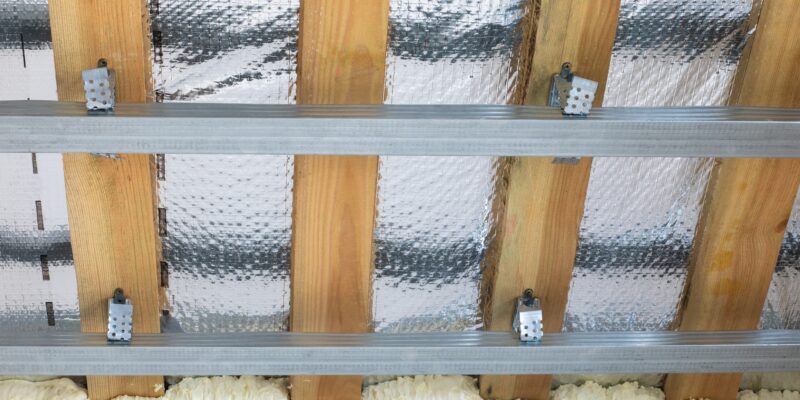
The metal roof deck is often viewed as the starting point of a roofing system, but metal deck roofing system integration with insulation and the roofing membrane above it plays a significant role in long-term performance. When these layers are not properly coordinated, issues like moisture buildup, loose fasteners, membrane damage, and early failure are far more likely.
This guide outlines proven best practices and common pitfalls contractors should watch for when integrating metal deck with roofing membranes and insulation layers.
Start with the Metal Deck
Before selecting insulation types or roofing membranes, it is essential to understand the metal deck itself. Deck profile, gauge, span, and flute direction all influence fastening patterns, deflection, and how insulation boards sit across the surface.
Excessive deck deflection can place added stress on fasteners, seams, and flashings over time. Flute direction can affect insulation stability and foot traffic durability. Slope also matters. Even low-slope roofs require positive drainage to avoid long-term ponding that accelerates membrane deterioration.
Air movement is another key factor. Metal deck assemblies can allow warm, moist interior air to move upward if air sealing is overlooked. This can lead to condensation inside the roof system even when insulation levels appear adequate.
Define the Control Layers Early
Every roof assembly needs to manage four control layers: water, thermal, air, and vapor. Problems often arise when one layer is expected to do the work of another. Clear coordination of these control layers is a critical part of effective metal deck roofing system integration, especially on commercial low-slope roofs.
The membrane manages water, insulation handles thermal performance, air barriers control air leakage, and vapor retarders address vapor diffusion when needed. Assuming insulation alone will prevent moisture problems is a common mistake. In many cases, uncontrolled air movement causes more damage than vapor diffusion.
Clear definition and continuity of these control layers significantly improve roof performance and durability.
Uncontrolled air movement often causes more moisture-related damage than vapor diffusion alone, a point emphasized in building envelope guidance from ASHRAE.
Match Insulation Strategy to the Metal Deck
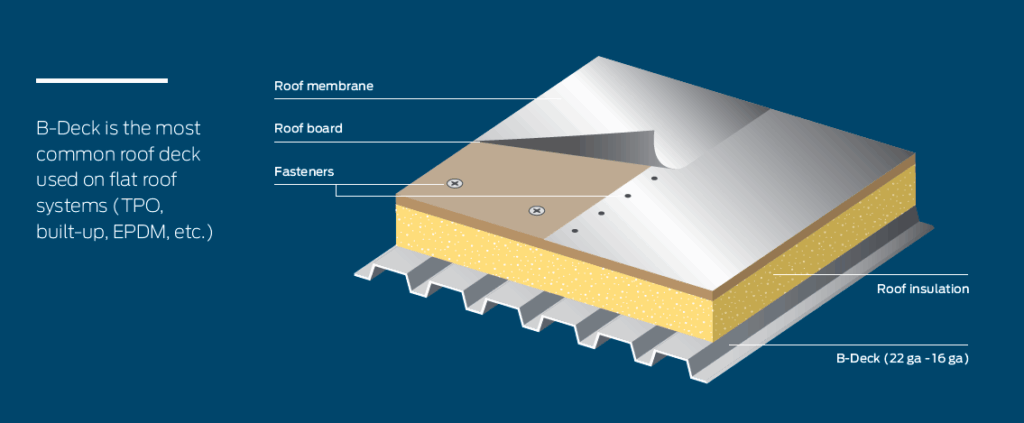
Metal deck ribs create an uneven surface, which can cause insulation boards to rock or bridge over flutes if the layout is not planned correctly. This often leads to inconsistent fastener engagement and increased stress on the roofing membrane.
Selecting appropriate insulation thicknesses, fastening patterns, and board sizes helps ensure secure attachment into the deck. In many assemblies, adding a high-density cover board creates a flatter, more durable surface for the membrane and protects the insulation below.
Flute direction should also be considered in areas with frequent service traffic or equipment access.
Be Intentional with Vapor Retarders
Vapor retarders are sometimes necessary, but they should never be added by default. Buildings with high interior humidity or strong seasonal vapor drive may require vapor control, while others perform better without it.
Improperly placed vapor retarders can trap moisture within the roof assembly, leading to wet insulation and reduced thermal performance. The decision to include one should be based on building use, climate, and roof system design rather than habit.
Coordinate Attachment Methods Early
The attachment method for insulation and membranes affects uplift resistance, thermal bridging, and long-term performance.
Mechanically attached systems require careful fastening patterns to ensure fasteners consistently engage the deck. Fully adhered systems depend on clean, dry substrates and proper installation conditions. Hybrid systems are often used to meet higher wind uplift requirements at edges and corners.
The attachment strategy should be coordinated with the deck type, roof zones, and local wind design requirements before materials arrive on site.
Details for Movement as Well as Waterproofing
Metal deck roofs experience movement due to temperature changes and structural deflection. Transitions that are too rigid often become failure points.
Special attention should be given to parapets, rooftop units, penetrations, and expansion joints. Good detailing allows for movement while maintaining watertight integrity.
Common Pitfalls to Watch For
Even well-designed roof systems can fail if small details are overlooked during design or installation. The following pitfalls are among the most common issues seen in metal deck roof assemblies, along with practical ways to avoid them.
Pitfall #1: Fasteners That Do Not Properly Engage the Deck
Fasteners that miss the deck web or strip out can lead to loose insulation, membrane flutter, and reduced wind resistance. This issue is often discovered only after the roof has been in service for some time.
Best Practice: Verify deck gauge in the field and match fastener type and length to the full roof assembly thickness. Use fastening patterns designed specifically for metal deck flute geometry.
Pitfall #2: Trapping Moisture During Construction
Moisture introduced during construction often has no way to escape once the roof system is complete. Wet decks, rain exposure, and uncovered insulation are common contributors to long-term performance problems.
Best Practice: Keep insulation dry, protect staged materials, and avoid installing roofing components over wet surfaces.
Pitfall #3: Using a One-Size-Fits-All Vapor Retarder Detail
Installing a vapor retarder without understanding building conditions can trap moisture inside the roof assembly and reduce insulation performance over time.
Best Practice: Evaluate interior humidity levels, climate conditions, and dew point location before deciding if a vapor retarder is needed and where it should be placed.
Pitfall #4: Skipping Cover Boards on Traffic-Heavy Roofs
Roofs with regular service traffic are more likely to experience punctures, crushed insulation, and membrane wear when cover boards are omitted.
Best Practice: Include a high-density cover board and plan designated walkway paths in areas with expected foot traffic.
Pitfall #5: Poorly Coordinated Roof Edges and Terminations
Many roof failures begin at edges due to inadequate securement, incompatible edge metal details, or incomplete coordination between roof components.
Best Practice: Design roof edges and terminations to meet wind uplift requirements and ensure compatibility between the metal deck, insulation, membrane, and edge metal systems.
Build the Roof System Right from the Deck Up
A roof assembly performs best when metal deck roofing system integration is addressed early, starting with proper deck selection and coordination with the layers above. Getting deck profile, gauge, and layout right makes it easier to install insulation correctly, achieve reliable fastening, and avoid moisture and performance issues down the line.
CSM Metal Decking works with contractors, architects, and project teams to help ensure the metal deck portion of the roof system supports the full assembly as intended. From selecting the right deck profile to coordinating details that impact insulation and membrane performance, the goal is to reduce risk before materials ever arrive on site.
If you are planning a project and want confidence that the roof system starts with a solid foundation, CSM Metal Decking is ready to support your team. Reach out early to discuss deck options, lead times, and coordination considerations that can help keep your project on schedule and built to last.