
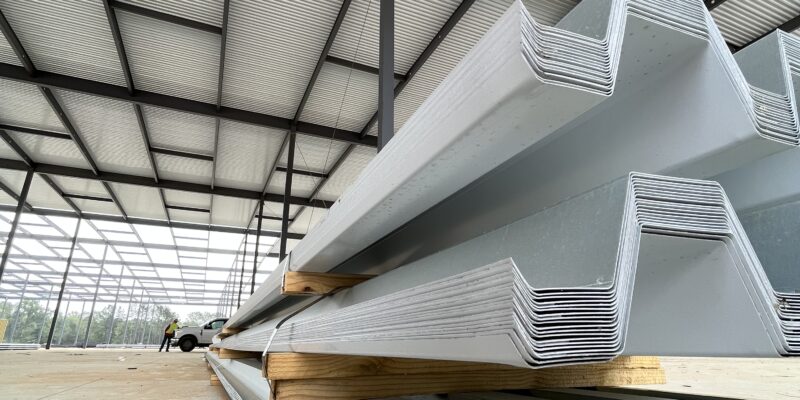
Exposed metal roof decking has become a common sight in modern commercial and industrial buildings. What used to be something hidden above a ceiling is now often left visible by design. While the look is intentional, the success of an exposed deck comes down to planning, coordination, and execution in the field.
For contractors, exposed metal decking brings a different set of considerations than traditional concealed roof systems. Here’s what matters most.
What Exposed Metal Roof Decking Means in Practice
Exposed metal roof decking refers to steel roof deck panels that remain visible from the interior of the building once construction is complete. There’s no drop ceiling or drywall covering the underside of the deck. What gets installed is what occupants will see every day.
This approach is most common in warehouses, manufacturing facilities, schools, gyms, and modern commercial spaces where a clean, industrial look is part of the design.
Because the deck is visible, it stops being just a structural component and becomes part of the finished space.
Why Owners and Designers Choose Exposed Decking
There are a few reasons exposed decking continues to be specified:
- It creates a modern, industrial aesthetic without added finishes
- Eliminating suspended ceilings can reduce overall project costs
- Steel decking is durable and holds up well over time
- Open ceilings make future access to systems easier
That said, the savings and visual impact only work if the deck is installed cleanly and planned correctly from the start.
Common Roof Deck Profiles Used for Exposed Applications
The same basic roof deck profiles are used whether the deck is exposed or concealed, but exposed applications leave less room for error.
Typical profiles include:
- Type B Deck for shorter spans
- Type N Deck where longer spans or higher loads are required
- Acoustical Deck when sound control is a concern
The profile choice should always be driven by structural requirements first. The fact that the deck will be exposed doesn’t change load calculations, span limits, or code requirements.
Finish Quality Matters More Than You Think
When the underside of the deck is visible, finish quality becomes critical. Uneven coatings, inconsistent color, or damaged panels will stand out immediately.
Common finish options include galvanized steel or factory-applied painted finishes. Regardless of the option selected, panels should be handled carefully on site to avoid dents, scratches, and coating damage.
Once the deck is up, there’s no hiding mistakes.
Exposed decking leaves little room for last-minute changes. Coordination with other trades needs to happen early, especially for:
- Mechanical and electrical runs
- Sprinkler systems
- Lighting layouts
- Roof penetrations
Field-cut holes, mismatched penetrations, or poorly planned attachments are all visible from below. Good coordination up front prevents costly fixes later.
Acoustic Considerations
Steel decking reflects sound. In large open spaces, that can quickly become an issue if acoustics aren’t addressed.
Depending on the project, solutions may include:
- Acoustical roof deck panels
- Suspended baffles or sound clouds
- Spray-applied acoustic treatments
If acoustics matter, this should be discussed during design, not after the building is occupied.
Read more about acoustic steel decking for noise reduction.
Installation Quality Is on Display
With exposed decking, workmanship is fully visible. Contractors should pay close attention to:
- Panel alignment
- Fastener spacing and consistency
- Clean edges and cuts
- Proper handling during installation
What might be acceptable above a ceiling won’t pass in an exposed application.
Structural Requirements Still Come First
Even though exposed decking is part of the visual design, it must still meet all structural and code requirements. Load capacity, fire ratings, and span limits don’t change just because the deck is visible.
Always verify that the specified deck profile matches the project’s engineering and local building codes.
When Exposed Decking May Not Be the Right Choice
Exposed metal roof decking isn’t ideal for every project. It may not be the best solution when:
- Tight acoustic control is required
- A traditional finished ceiling is expected
- Mechanical systems need to be fully concealed
Knowing when exposed decking does not make sense helps contractors guide owners toward better long-term outcomes.
Get the Right Decking for Your Exposed Roof Project
When exposed metal roof decking is part of the design, having the right manufacturing partner matters. Consistent profiles, clean finishes, and dependable lead times make a real difference once the deck is on display.
Extra precaution must be taken to safely store deck on at the jobsite prior to installation when the bottom of the deck will be exposed. View our article here for more details on jobsite storage of steel deck.
CSM Metal Decking works with contractors to supply roof deck products that meet structural requirements while maintaining the visual quality that exposed applications demand. Whether you’re pricing an upcoming project or finalizing specifications, the CSM team can help ensure the decking you install performs and looks the way it should. Contact us today to discuss your next exposed roof deck project or request a quote.